
🎯Adaptation by the Acre: Precision Agriculture & the Business of Feeding Tomorrow’s Planet
Our deep dive into Precision Ag - where are conditions ripe for innovation, and what are the key questions founders should be asking?

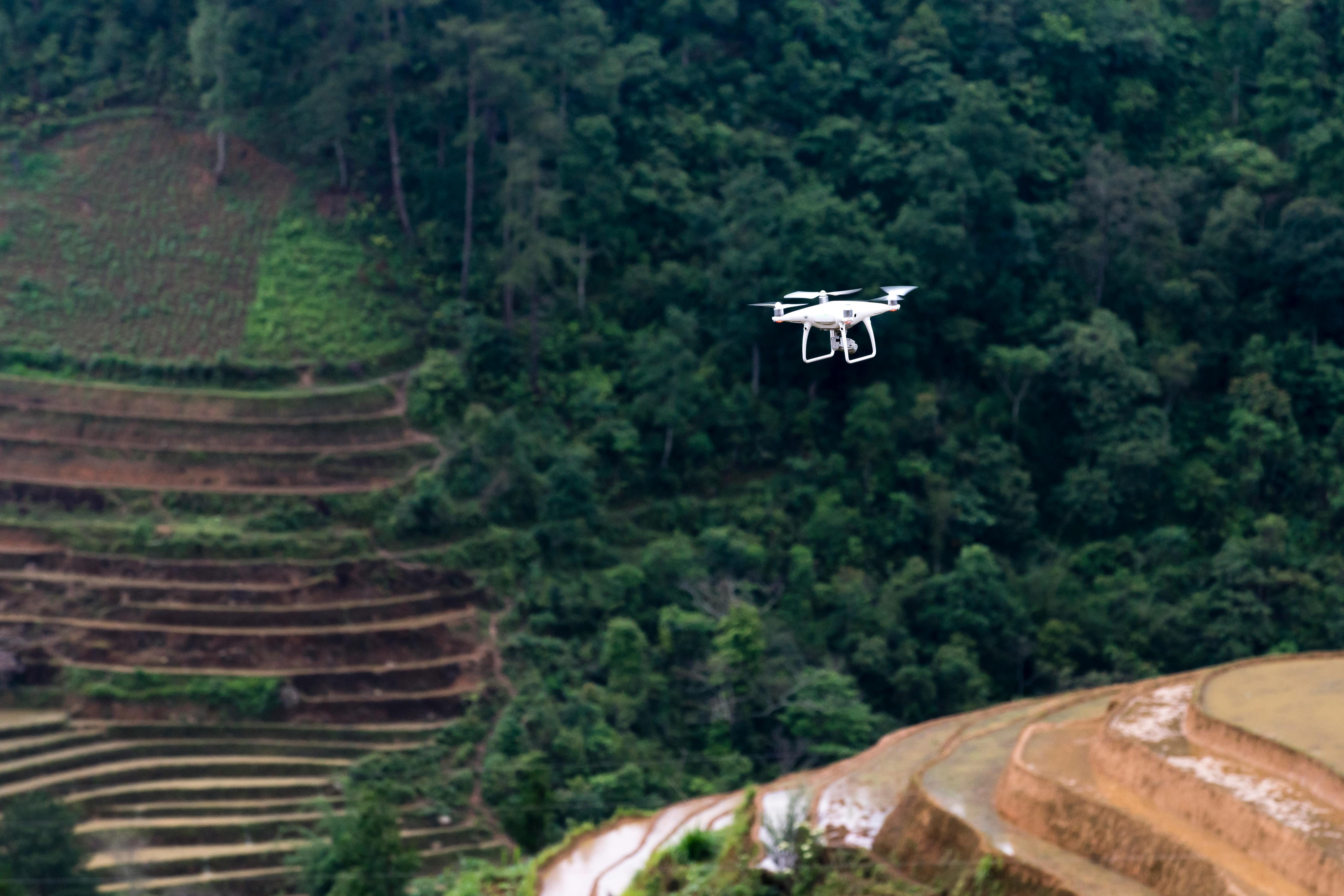
🌾 Chapter 1 of GigaClimate’s Adaptation and Resilience Series: Agriculture & Food Systems
Feeding a hotter, drier, and less predictable world.
Farmers around the world are facing a growing wave of climate extremes, multi-year droughts, record-breaking floods, and increasingly erratic growing seasons. 26% of global climate-related economic losses occur in agriculture, increasing to 83% in drought-prone developing regions. Since 2000, the frequency of extreme weather disasters has more than doubled. With each degree of global warming, maize yields could reduce by 7.4%, wheat by 6%, and rice by 3.2%, with the worst effects expected in tropical and lower-income regions. Climate risk is no longer abstract — it’s already changing what can be grown, where, and when.
A new wave of agricultural innovation, spanning biotech, software, and systems design, is unlocking smarter, more adaptive food production. Over the next few weeks, we’ll explore four key levers for agricultural resilience: precision agriculture, crop and livestock adaptation, soil health, and supply chains.
🌱 Precision Agriculture: Smarter, Leaner, Climate-Aware Farming
🛰️ From Tradition to Precision
For generations, farming has long run on tradition, passed down through seasons, soil, and instinct. But today’s climate demands something new. With shifting weather patterns, unpredictable yields, a rising global population, and rising input costs, agriculture is transforming. Precision agriculture isn’t about replacing the farmer; it’s about equipping them with information and power to make real-time decisions. Powered by AI, remote sensing, data access, and real-time insights, this new wave of tools helps growers make smarter, faster, more adaptive decisions. It’s a bridge from legacy to longevity, and it’s already reshaping how we grow food.
🌍 Problems to Solve
Scope of the Problem: Precision agriculture has matured technically but remains underadopted commercially. Many farms already have GPS guidance, yield monitors, or variable-rate systems, yet their full potential isn’t being utilized. High upfront costs, poor data, and poor interoperability between OEM hardware and software platforms create friction, with connectivity gaps further limiting uptake. The result is a market with proven technology that isn’t delivering at scale.
Current Adaptation and Resilience Gap: Most farms still operate largely on fixed calendars and rules-of-thumb, even as rainfall, heat, pest pressure, disease pressure, and soil conditions become more variable. We see an opportunity to close this gap with scalable, integratable, economical precision agriculture that makes financial sense for the majority of mid- to large-sized farms in high-value regions. Not everything needs to work for everyone, but it must work where capital and customers already exist.
📊 Demand Drivers
For all the buzz around agtech, the real question isn’t whether precision agriculture works; it’s integration, usability, and farmer adoption which need to all be linked. There isn’t a lack of innovation, but a mismatch between what's being built and what farmers actually need: tools that are practical, proven, and economical.
Data from U.S. farm surveys, field trials, and global adoption trends paint a clear picture: demand is growing, but it’s fragmented, cautious, and heavily context-dependent. Understanding the real signals from the ground can help innovators design for uptake, not just invention.
Adoption: In the U.S., over 50% of row crop acreage uses GPS guidance. But advanced tools like soil maps and drones remain under 25% and between 3-10% (depending on the crop), respectively.
Younger Farmers Drive Demand: Younger, digitally native farmers are much more likely to adopt precision tools, especially in regions with better support networks.
Data Overload & Quality: Data volume isn’t the issue. It’s the ease-of-use, translating it into actionable insights while controlling for quality.
Digital Openness is Rising: 39% of farmers globally are using or planning to use agtech tools; 43% are trying new products to boost yield. Spiking input costs of up to 247% are pushing even risk-averse farmers to explore these tools.
Climate is Forcing Change: Drought and fertilizer shocks are accelerating demand for efficient, resilient tools. Precision irrigation is spiking in high-heat zones as farmers attempt to stretch shrinking water budgets.
The demand is real, but it’s conditional. Farmers don’t need more sensors or smarter software. They need solutions that earn their trust, lower their risk, and work in their context. The next wave of adoption won’t come from novelty; it’ll come from meeting farmers where they are, with tools that just work.
Industry Maturity: Precision agriculture is a mature-but-fragmented industry. Core hardware like GPS guidance, yield monitors, and soil sensors is widely adopted on large farms, especially in North America and Brazil. Major players like John Deere and AGCO have poured billions into automation and robotics, pushing the frontier of what’s possible on the ground. But the ecosystem hasn’t caught up. Software is still siloed, and data often goes unused. Most tools are still built for high-capital, row-crop operations, not the diverse realities of global agriculture.
It’s a bit like the early smartphone era: the hardware is here, a few apps are great, but nothing really talks to each other.
🚧 Challenges & Barriers
Precision agriculture has huge potential, but adoption remains uneven. High costs, fragmented data, and limited connectivity remain major barriers, especially in climate-vulnerable regions. These challenges are solvable, but only with smart design, creative financing, and local support.
Cost vs. Scalability: High prices remain a top barrier — 47% of farmers globally cite tech cost as a major hurdle to adoption. While companies like Trimble and AGCO are beginning to offer subscription-based or leasing models, these aren’t yet widespread. To scale, solutions must deliver a 3x ROI within a few growing seasons, typically at a $10-$15 per acre cost ceiling. Bundled hardware-as-a-service (HaaS) models that combine hardware, software, and support offer the best path forward.
Connectivity & Access: Real-time tools struggle where rural internet lags, even in the US. Scalable solutions must be offline-first, like TaroWorks, and work on low-bandwidth or basic mobile networks. Tools that integrate with LoRaWAN or SMS platforms and require minimal IT setup are far better suited for widespread adoption.
Data Fragmentation: Farm data is often siloed across sensors, logs, and equipment that don’t talk to each other. Groups like AgGateway push for standards, but integration is rare. Scalable solutions act as data orchestrators, offering plug-and-play APIs for major OEMs, not just more apps. While interoperability is a potential unlock, many ag platforms are intentionally closed. Founders trying to bridge systems like Deere or Bayer face a high risk, as these companies control the interfaces and can change the rules at any time. It’s a structural challenge that needs to be named.
Data Ownership & Privacy: Farmers want to know who owns and profits from their data, and without clear answers, adoption stalls. Scalable tools offer transparent terms, opt-in sharing, and farmer control. Extra trust comes from features like decentralized storage or blockchain, but only if they simplify, not complicate.
Data Quality: Many tools rely on incomplete, inaccurate, or poorly localized data, leading to inconsistent recommendations and farmer frustration. Bad data will never yield good analysis, and precision agriculture is only as useful as the inputs it runs on.
Farmer Trust & Training: Adoption lags when farmers aren’t familiar with the tech — 29–36% of farmers report skepticism across Asia, South America, and North America. Scalable tools build trust through peer networks, co-ops, and trusted agronomics, not cold outreach. Programs like One Acre Fund prove that in-person demos and local champions can drive real behavior change.
🌐 Who’s Solving What Today?
Precision agriculture is evolving into a full-fledged system, driven by a mix of nimble startups and big ag incumbents solving real-world challenges. Here’s what that looks like on the ground:
AI-Driven Decision Support: CropIn and Fasal deliver real-time platforms that integrate weather, sensors, and models to guide day-to-day decisions, from irrigation to pest management. AgSquared focuses on whole-farm management, helping growers plan, track, and optimize activities season after season.
Variable Rate Application: AGCO’s Fuse platform delivers variable-rate seeding and spraying, helping farmers apply inputs precisely where needed. Raven Industries helps to adjust application rates in real time to improve efficiency and reduce waste. Upside Robotics maximises fertilizer efficiency using autonomous in-field robots.
Drone & Satellite Sensing: Hummingbird Technologies and Gamaya specialize in hyperspectral and machine learning–based image analytics, identifying crop stress, disease, and nutrient deficiencies at the canopy level. InnerPlant designs crops to give unique signals detectable by on-ground or satellite sensors when they are under stress.
Soil & Root Zone Sensors: Sensoterra offers wireless soil moisture sensors designed for precision irrigation in open fields and orchards, while METER Group provides advanced sensors that monitor soil moisture, temperature, and salinity.
Smallholder-Centric Platforms: Apollo Agriculture provides smallholder farmers with mobile-based agronomic advice, weather-smart recommendations, financing, and insurance. Digital Green uses localized video content and digital tools to deliver precision farming knowledge directly to low-connectivity farming communities.
🔭 TLDR: Where are the Conditions Ripe for Innovation?
GigaClimate’s POV: The next wave of investable precision agriculture companies will succeed by solving for:
Scalable ROI in Developed Markets: Most adoption and revenue will come from large and mid-sized farms in developed regions, think North America and Europe. Focus should be on crop-specific software that enhances existing machinery and tech stacks, not reinvention. As these tools mature, they can scale down to smaller farms, unlocking global impact. All farm sizes have a role to play, but scale starts where ROI is clearest.
Hardware-as-a-Service (HaaS): Precision agriculture tools delivered on a subscription model will drive faster uptake. Focus should be on bundling soil and crop sensing platforms with embedded advisory and payback in just a few seasons.
Data Orchestration Platforms: Farmers don’t need more dashboards; they need orchestration. Focus should be on middleware tools that integrate across machinery, agronomic insights, and climate models, while recognizing that major OEMs often run closed systems, making interoperability both critical and difficult.
The real immediate opportunity isn’t building for everyone, it's building for the over 350 million acres in the US already using base-level precision hardware. That’s the commercial beachhead. Inclusion of smaller, distributed adopters will follow, but scale starts here.
✅ Key Questions for Builders
Precision agriculture is no longer a futuristic concept; it’s here, but most tools are still built for capital-rich farms in capital-poor ways. We should not be chasing universal solutions, but focus on building products that start where money, infrastructure, and urgency already intersect, and grow from there. Inclusion is essential. But viability is first.
At GigaClimate, we provide hands-on support to climate hardtech founders to accelerate from concept to commercial scale, building the business from day one for the fastest route to market and exit.
If you’re thinking about building in precision agriculture, start by asking yourself:
Can my solution prove 3x ROI in a few seasons at a $10–15/acre cost?
Does it plug into the systems farmers already use, or do they need to rip and replace?
Can it work in low-connectivity environments without losing functionality?
Does it simplify decisions rather than adding more data to manage?
Is it resilient to OEM platform lock-in and shifting API rules?
If you can answer “yes” to these, you’re on the path to solving high-value, adoption-ready problems in one of climate’s most critical sectors. Get in touch if you’d like to speak with our team about how we take a handheld approach to building for commercial scale.
This is the first of many pieces exploring the frontier of climate adaptation and resilience. Follow GigaClimate as we break down the most actionable, investable opportunities, one sector at a time.
Super insightful!